


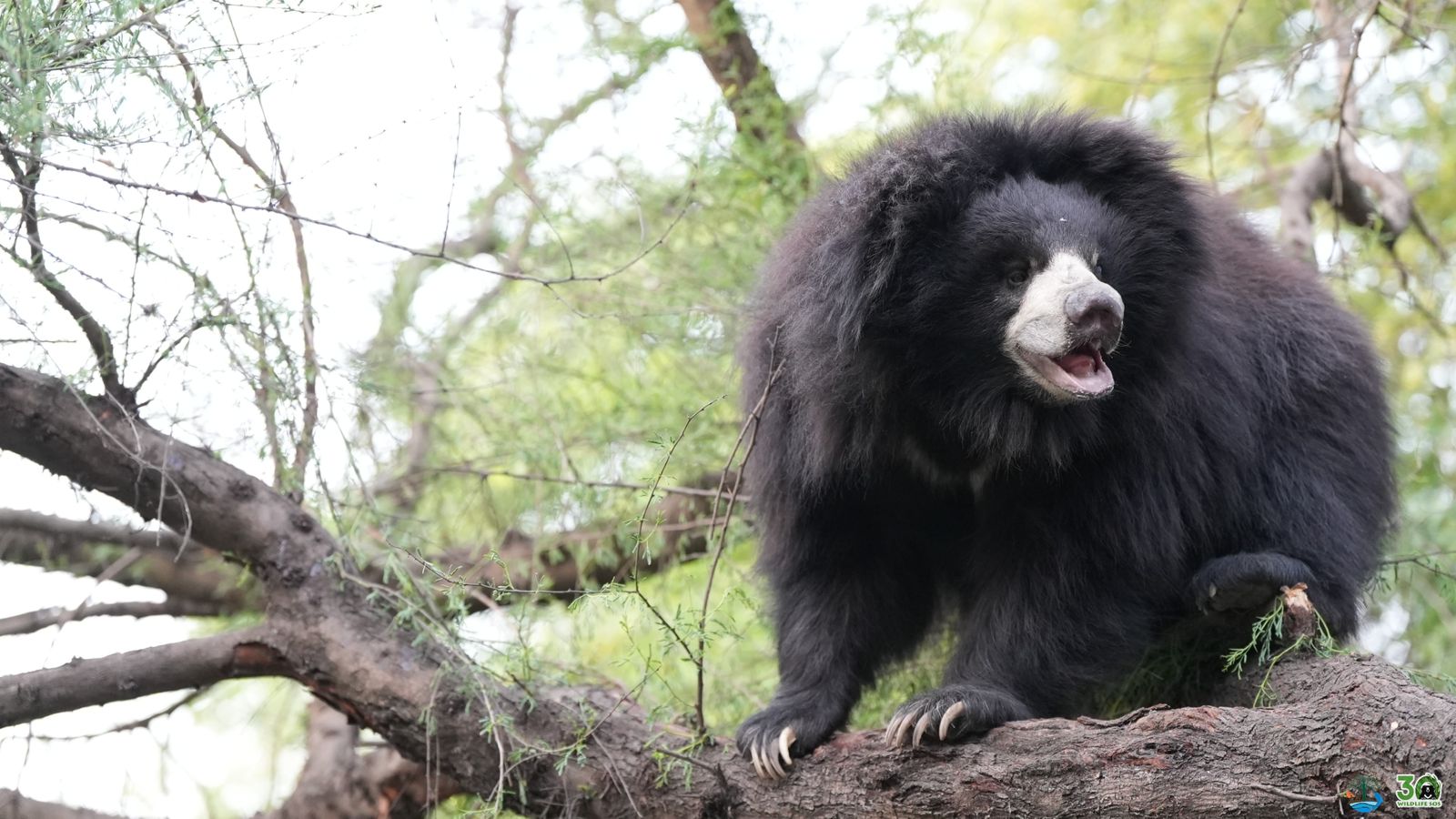
Jharkhand. Rescued from years of exploitation, female bear exhibits severe trauma while beginning her recovery under expert care at Wildlife SOS An adult female sloth bear, estimated to be 10-12 years old, has been rescued from the illegal ‘dancing’ bear trade by the state forest department, from Jamtara in Jharkhand. Previously held in captivity and subjected to performance-based exploitation, the bear has now been relocated to the Agra Bear Rescue Facility (ABRF), where she is receiving specialised long-term care under Wildlife SOS.
A sloth bear was rescued in Jamtara district after the Jharkhand Forest Department apprehended a member of the Kalandar community who had been exploiting her for performances. Upon intervention, the bear was found restrained with a rope and chain, which had caused significant physical and psychological distress. Following coordination with the authorities, the Wildlife SOS rescue team reached the site and safely secured the bear, now lovingly named Gracie.
Due to the restraints, the bear had undergone severe physical alterations during captivity. Her incisors and canines had been forcibly removed, leaving her unable to bite. She was also found to be suffering from diarrhoea, wounds around the rope restraint area, and blindness in her left eye due to corneal scarring caused by past trauma. Despite these challenges, she remained relatively calm during the rescue, displaying a subdued and docile temperament.

Dr. S Ilayaraja, Deputy Director- Veterinary Services, Wildlife SOS informed, “Upon arrival at our facility, the bear initially appeared fearful and hesitant. However, her behaviour soon revealed signs of long-term conditioning – she began standing on her hind legs, moving in circles and vocalising loudly. These actions are consistent with behaviours seen in former ‘dancing’ bears, who are trained through prolonged negative reinforcement and physical coercion. Caregivers also observed that the rope embedded in her muzzle caused discomfort, affecting her ability to eat.”
Following careful intervention, the rope has been safely removed. A comprehensive medical examination was conducted, including full-body X-rays and ultrasound diagnostics. The examination revealed multiple health concerns, including a muzzle wound from prolonged rope insertion, osteoarthritic changes in the hip joint, mild pneumonic changes in the lung, and abnormalities in the liver and gall bladder. She has since been started on a targeted treatment plan involving hepatic supplements, joint support medication, immunoboosters and ongoing wound care.
Kartick Satyanarayan, Co-founder and CEO of Wildlife SOS said, “While India successfully eliminated the ‘dancing’ bear practice years ago, isolated cases like this remind us that the threat has not been entirely eradicated. As we mark World Bear Day today, this rescue reminds us of the role of continued vigilance and collaboration with enforcement agencies in bear conservation. We are committed to ensuring that this bear receives the care and dignity she was long denied.”
Baiju Raj M.V, Director- Conservation Projects, Wildlife SOS stated, “Currently under a mandatory quarantine period, the bear is being gradually introduced to a more species-appropriate diet, transitioning from rotis to multigrain porridge, fruits such as watermelon and papaya, and dietary supplements. Caregivers are also implementing positive conditioning techniques to build trust and encourage natural behaviours, supporting her long-term rehabilitation journey. We would like to extend our gratitude to the DFO Jamtara for their invaluable support for rescue and transfer of the bear for rehabilitation.”
Shresatha Pachori
Senior Press Officer
Wildlife SOS.